Open Today Dubai: 10am - 6pm | Ramallah: 10am - 6pm
Open Today Dubai: 10am - 6pm | Ramallah: 10am - 6pm
17 October – 17 December, 2026
Depletion
Alaziz Atef
Location: Ramallah
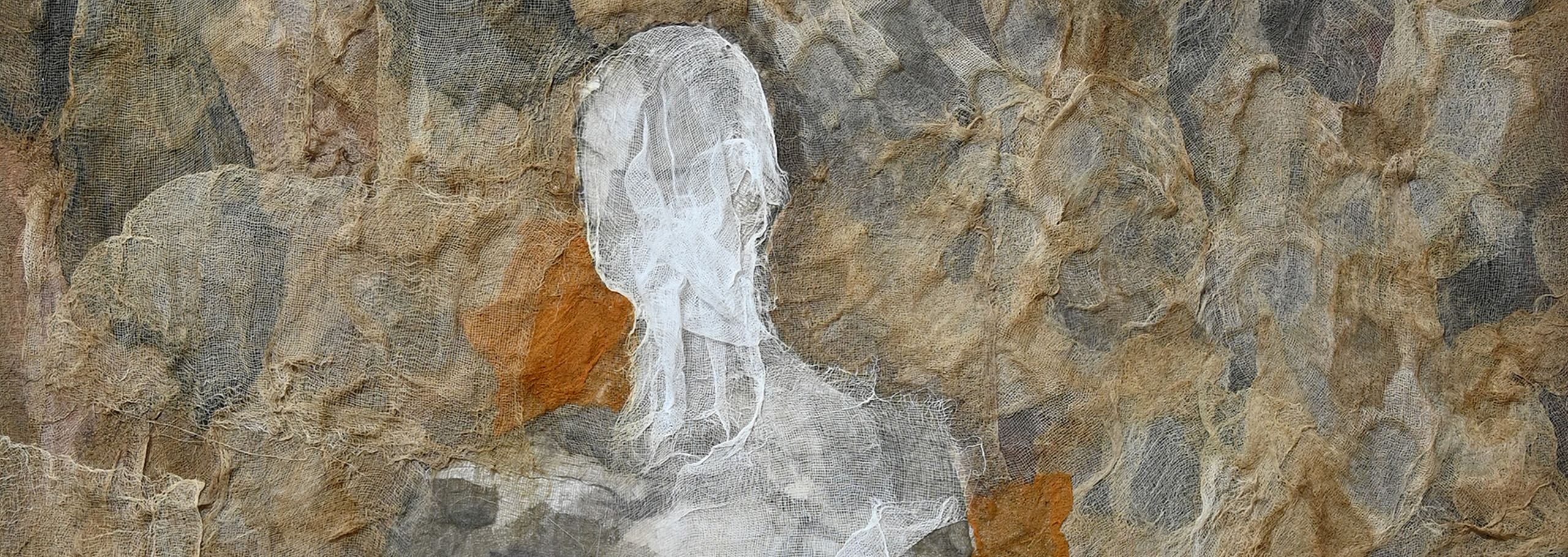
This is an exhibition about the body, pain, and memory; a triad that reads thousands of images and witnesses of severed limbs, shrapnel, and people. It is about artistic bandages and paintings that are crying out. Yet the silence within them is a stifled lament that produces a helpless bewilderment: what can we do in the face of this spiritual devastation and unprecedented historical catastrophe?
It is an exhibition on the wounds of tragedy and the surgery of art. Reality demands scalpels and first-aid tools, rescue, dissection, and the monitoring of a condition and its outcomes. Here, the artist is not a doctor on duty, but a wounded surgeon, and the canvas is a vast bed in the great chamber of existence. Here, on the walls where emergency aid kits are hung, these paintings respond to the alarms of pain, as if asserting themselves as a necessity within reach of the caregiver, the displaced, the returnee, and the afflicted.
The ethical responsibility inherent in these works does not point to victims in abstract form or name them on the surface; rather, it summons their phantoms in a deconstructive attempt, placing them at the heart of the story, deepening the meaning of their existence and lives.
The originality of these works is not only as a result of unusual technique in the artistic production process of human expression of the tragedy and its visual representation in relation to a specific time and place: Palestine – Gaza, the war of October 7, 2023; that is the geography and ensuing time of genocide. But it also depends on the material itself, carrying elemental components and raw materials not complicit in the mode of rapid production and consumerist design. It does not dissolve into the notion of modernity and transcendence so much as it generates its own concept of the “trace”, in Walter Benjamin’s expression. These paintings dig into the materiality of this trace itself: the fire within the body, the woman in displacement, and objects serving as a parallel history that reads the trace from the side of remnants, or what remains.
Thus, the gauze pores are archival; they reveal and conceal, select and obscure, allowing formations of the past and displacements of the present to seep into their texture. It is a medium that absorbs pigments, colour formulations, and heavy ointments that beg for healing, and draw inspiration from the commemorative allusion to the meanings of bleeding in wounds and nihilism in displacement.
These visual documents refer to human skin in its most basic need, as it covers layers of pain as the machinery of colonial savagery looms in the background, announcing the end of the moments of tending wounds. As it cuts off the very breath of life, it denies the chance for survival, leaving the gauze to return to its white neutrality and its innocent helplessness.
This compounded depletion mirrors the artist’s exhaustion and the draining of his working material. It justifies the sheer scale and quantity of the gauze filling this exhibition, a presence defined by the perfection of its own incompleteness. Must the Palestinian humanity merge with its wounds? Or should it declare, through art and culture, within the suspended moment and continuous memory, that the tools are depleted and the materials have finished?
(Text by Ali Abu Ajamiyeh)